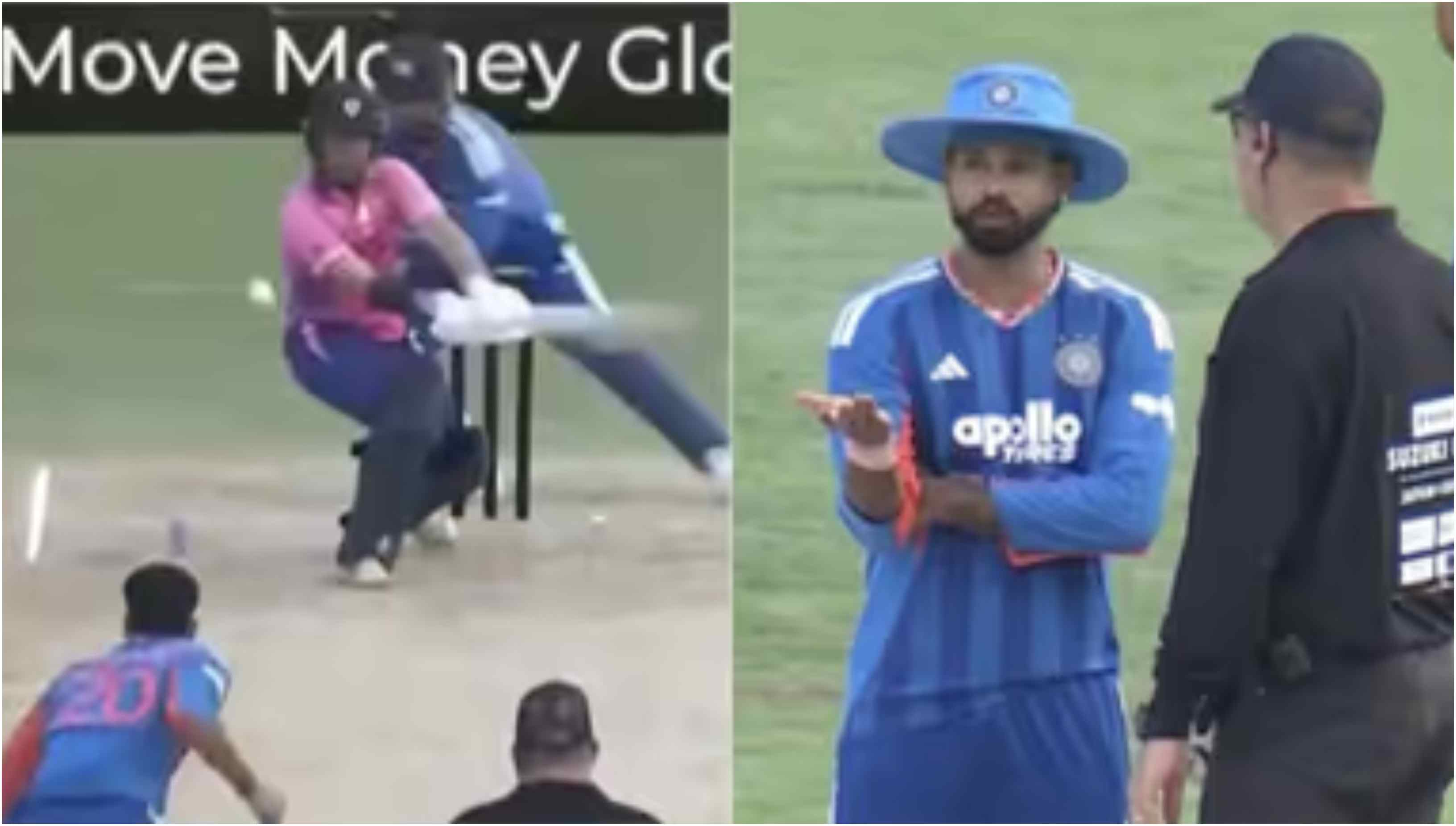
Former international umpire Anil Chaudhary explained the rule behind the massive wide-ball controversy during the one-off T20I match between India and Japan at Sano International Cricket Stadium on Tuesday (September 22).
In a rain-shortened five-over match, Japan came agonizingly close to a historic upset, needing 8 runs off the final over to chase India's low total of 32 on a turning pitch.
Facing India's Axar Patel, Japanese left-handed batter Alexander Shirai-Patmore attempted a reverse sweep/hit and missed. The ball passed down the side that would have been his leg side in his original stance.
Striker's-end umpire Chris Thurgate initially called it a wide. Following intense protests from Axar, captain Shreyas Iyer, and Sanju Samson, the square-leg umpire Chris Brown intervened, and Thurgate reversed his decision to a fair delivery. India went on to escape with a narrow two-run win.
The incident drew heavy criticism from international cricket fans and journalists, who accused the Indian team of "bullying" the on-field umpires into changing their call in a match without the Decision Review System (DRS).
Taking to Instagram, Chaudhary shared a video to address the controversy, clarifying that despite the chaotic nature of reversal, the final decision made by the umpires was strictly correct according to ICC playing conditions.
“Controversy happened when Axar Patel delivered a ball and it was signaled wide. It was said on commentary that wide shouldn’t have been called as it was a switch hit, and perhaps from there confusion started and fans got into a debate on social media,” Chaudhary said.
He then explained that once the batter attempts a reverse sweep, the delivery is judged as if both sides of the wicket are the off-side.
“See, reverse shot or switch hit, whether you execute or make an attempt to play, both your sides become off-side with respect to wide balls… It was not a wide,” Chaudhary added.