England have been on the receiving end of the ongoing Snickometer malfunction controversy in the ongoing third Test of the Ashes 2025-26 series against Australia in Adelaide. Australia posted 371 in their first innings, with Alex Carey making 106 and Mitchell Starc hitting 54. Jofra Archer took 5/53, while Brydon Carse and Will Jacks took two wickets each.
When it was England’s turn to bat, the top order capitulated with Zak Crawley and Ollie Pope falling for single-digit scores, Ben Duckett making 29 and Joe Root falling for 19 runs. Nathan Lyon went past Glenn McGrath’s record of 563 Test wickets in the process.
Harry Brook (45) and Ben Stokes tried to steady the ship before Brook was dismissed by Cameron Green, and then Jamie Smith came in the middle to join his skipper.
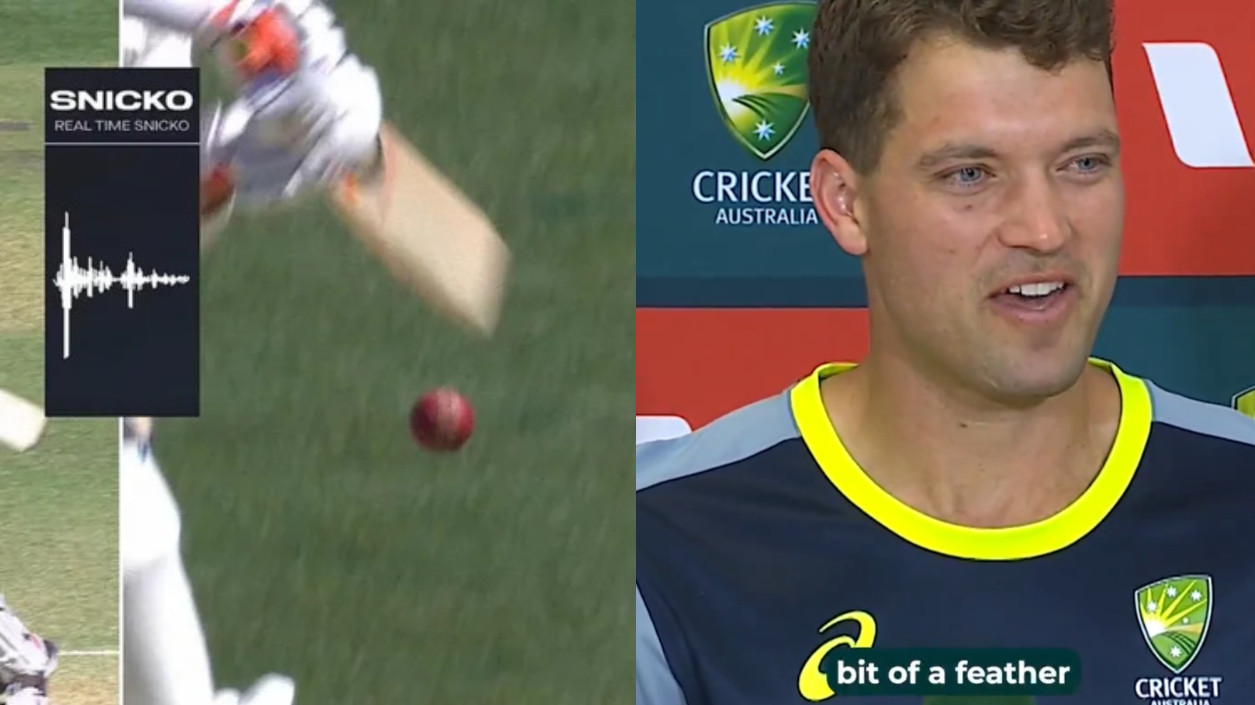
The duo tried to counter the Australian bowling and Smith was looking comfortable at the pitch. However, he also encountered the Snickometer curse twice in his innings. Once, he was given a reprieve, when Pat Cummins bowled a short one and Smith apparently gloved the ball to slips.
However, the Snicko showed no spike when the ball was near the gloves, and the spike came one frame later when the ball was past the gloves. This saved Smith from dismissal, and Australians were not happy with the decision.
See here:
The second incident happened when Smith attempted to play a pull shot after Pat Cummins bowled him a short ball. On-field umpire Nitin Menon sent the decision upstairs to determine whether the catch was clean after the ball reached wicketkeeper Alex Carey.
Then, replays revealed a distinct space between the bat and the ball. But as the ball passed Smith's bat, the Snickometer showed a spike, and third umpire Chris Gaffaney declared the England wicketkeeper out based on that spike.
Captain Ben Stokes seemed dejected, and Smith shook his head in shock right away. As the ruling was reviewed, they both appeared perplexed, and once the "OUT" result was confirmed on the large screen, Smith left, shaking his head.
The broadcast commentary suggested the spike was difficult to interpret and questioned whether the picture and sound matched at the key moment.
See here: