The ODI format is facing an existential squeeze due to the relentless expansion of global T20 leagues. To maintain relevance and player availability, the ICC is evaluating radical structural changes, including shortening ODIs from 50 to 40 overs, creating fixed international windows, and limiting bilateral ODIs to the 18 months leading up to a World Cup.
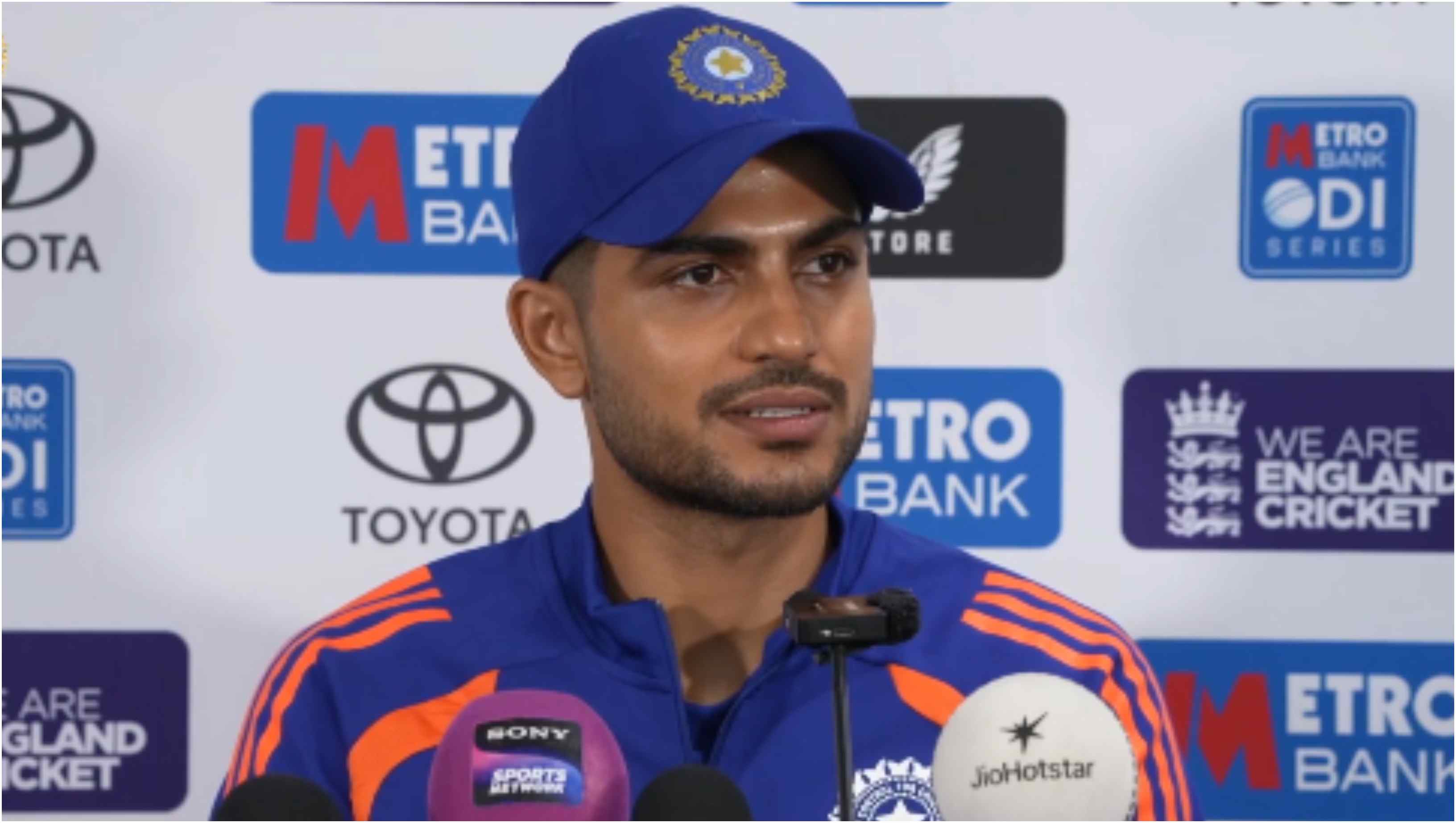
However, India skipper Shubman Gill on Monday (July 13) opposed shortening ODIs to 40 overs, arguing the format doesn't need to be cut down. Instead, he suggested that reintroducing multi-nation triangular and quadrangular series is the key to reviving viewer and player interest.
"I don't think it should be 40 overs,” Gill said while addressing the media on the eve of the first ODI against England at Edgbaston.
“We used to play a lot of triangular series and it was a lot of fun to watch. We used to play in Australia — India, Australia, Sri Lanka. You're not playing with just one team. You're playing against two different teams. You're playing at different venues.
“So, I think, if we want to make this (ODI) format interesting, instead of having bilateral series, we should have triangular series, maybe quadrangular series. Let's do something like that, so that it will be interesting to play and watch,” he added.
The 26-year-old emphasized the importance of maintaining the traditional 50-over format, particularly given its significance in building up to the World Cup.
“I grew up watching 50-over cricket a lot and it remained a very integral part of my childhood. Whenever I think of the World Cup, the first thing that comes to my mind is the 50-over World Cup. So, in that sense, the most prestigious World Cup for me, if you want to win one, would be the 50-over World Cup,” he noted.
The discussion about the future of ODIs also shifted Shubman Gill's attention to India's preparations for the 2027 World Cup in South Africa.
“The preparation for the World Cup (2027) is very important. Our mindset is about what kind of combination we can try, and the wickets we will get in South Africa will be similar to what we will play on here. So, understanding which combination is best for us makes this a very important series (vs England),” he said.
The 26-year-old also views the three-ODI series against England as an opportunity to expand his captaincy experience.
“Definitely, it (learning as a skipper) is very important. I think any series that we play from here on, as a group and as a captain, is going to be very important for me. All the learnings that I am going to have and all the experience that I am going to have leading up to the World Cup are going to be very crucial.”
With the Indian management using the bilateral series to fine-tune combinations for the 2027 World Cup, Gill ruled out the notion of instability in the team.
“You know, in such a series, it doesn't feel like an unsettled XI. You have to give opportunities to new players. You have to give them experience. As we were talking about experience, the more pressure situations they are exposed to and the better they perform, the better it will be for us before the World Cup,” he remarked.
“You play 11 matches in the World Cup and, usually, the bilateral series we play consists of either five or three matches. Most often, it is three matches. So, playing three matches and playing 11 matches makes a big difference.”
Gill stressed that injuries to key players like Nitish Kumar Reddy and Harshit Rana disrupted the team's planned combinations, but the squad remains stable.
“We were a bit unfortunate. Reddy got injured before the series. Harshit Rana is injured. So, players like these, we wanted to play as many matches as possible before the World Cup so that, when their turn comes, they feel settled. In that sense, we felt a bit unfortunate. So, we had to play a different combination. But it is not that it is an unsettled XI.”
Shubman Gill hoped that players would gain some valuable experience from the series against England.
“But obviously, there are some areas where we wanted our players to get more experience in big series such as the England series or the upcoming New Zealand series.
“So, if the players get more opportunities in these big series, they will have a better chance of performing in pressure situations,” he said.
(With PTI Inputs)