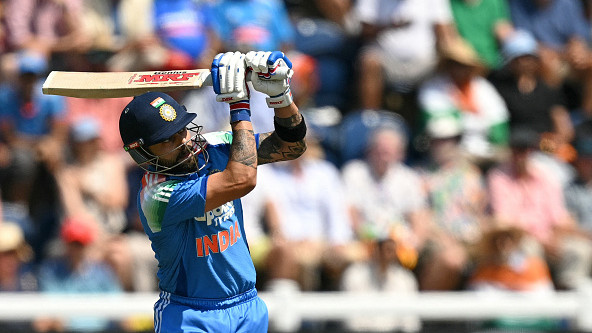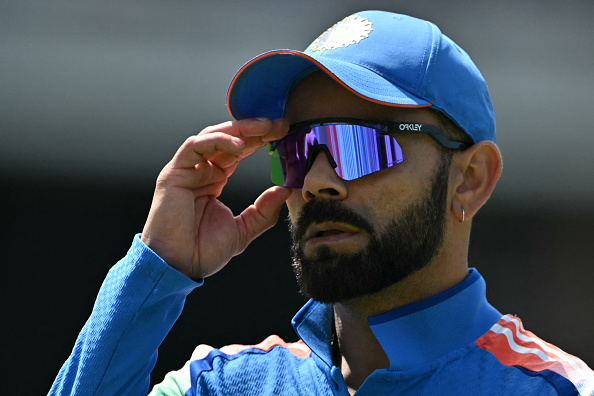
Virat Kohli has officially confirmed that the 2027 ICC Men's Cricket World Cup will be his final global ODI tournament representing India.
Speaking to JioStar ahead of India's bilateral ODI series against the West Indies, the 37-year-old batting stalwart revealed that the desire to secure one final 50-over world championship is his driving force.
He emphasized that the tournament—jointly hosted by South Africa, Zimbabwe, and Namibia—presents a grueling challenge due to unfamiliar, foreign playing conditions.
"Also now, it's in foreign conditions. It takes a lot out of you. For me, it's the last World Cup I'm going to play for India. And that is my motivation. Like, you know, to leave everything out there," Kohli said.
Since retiring from T20Is in 2024 and Test cricket in 2025, Kohli's international career is now entirely anchored around the 50-over format.
The veteran campaigner noted that an ODI World Cup demands extreme physical and mental resilience, comparing it to playing "2.5 T20 games in one day" across a stretch of 10 matches.
"The intensity of a 50-over World Cup is greater than anything. Because now, it's about 10 games at a T20 level of intensity. But you are playing 2.5 T20 games in one day. And to maintain that intensity for 10 games in a big tournament and World Cup is a big deal," Kohli said.
Having experienced the highs of winning the trophy in 2011 and the heartbreak of losing the final in 2023, Kohli stated he is ready to do "whatever it takes" and leave everything out on the field.
"Of course, the goal is absolutely to win the World Cup. And whatever it takes, I'm absolutely ready," he remarked.
During the interview, Kohli also explained how the psychological and competitive intensity of T20 cricket changes drastically depending on the platform.
He emphasized that the format cannot be treated as a single category, distinguishing between bilateral series, the IPL, and World Cups based on their distinct pressure patterns.
"It's different in different ways. T20 cricket can be broken down into three parts. T20 cricket in bilateral series, at least during the time that I played them, was very different from World Cups. The intensity of the World Cup was extreme. The IPL intensity was higher than bilateral series simply because of the level of competition in every game. All teams are strong now. There are no weak teams," Kohli stated.
"Every second game, you're playing against someone new. It's a new challenge, and it stimulates you in a different way. World Cups are different again. You're playing against different teams, but you only have about four opportunities. If you mess up in two, you're home, and it's a big deal. So, those intensity patterns were different in T20 cricket," he elaborated.
Kohli stressed that ODI cricket offers a clear pathway to test squad combinations and prepare players for major global events.
"ODIs are quite simple. Bilateral series run at a certain intensity, and you're always working towards a big competition. You're utilising these games to figure out combinations, which player fits into which role, how you can utilise players differently, and how you start giving players game time under pressure," he said.
The former India skipper also underlined that the ODI World Cup essentially demands the hyper-athletic, high-octane energy of a T20 match but sustained for nearly six hours per game across a 10-match tournament.
"The intensity of a 50-over World Cup is greater because now it's about 10 games at a T20 level of intensity. To maintain that intensity for 10 games in a big tournament and a World Cup, especially in foreign conditions, is a big deal. It takes a lot out of you," Kohli concluded.