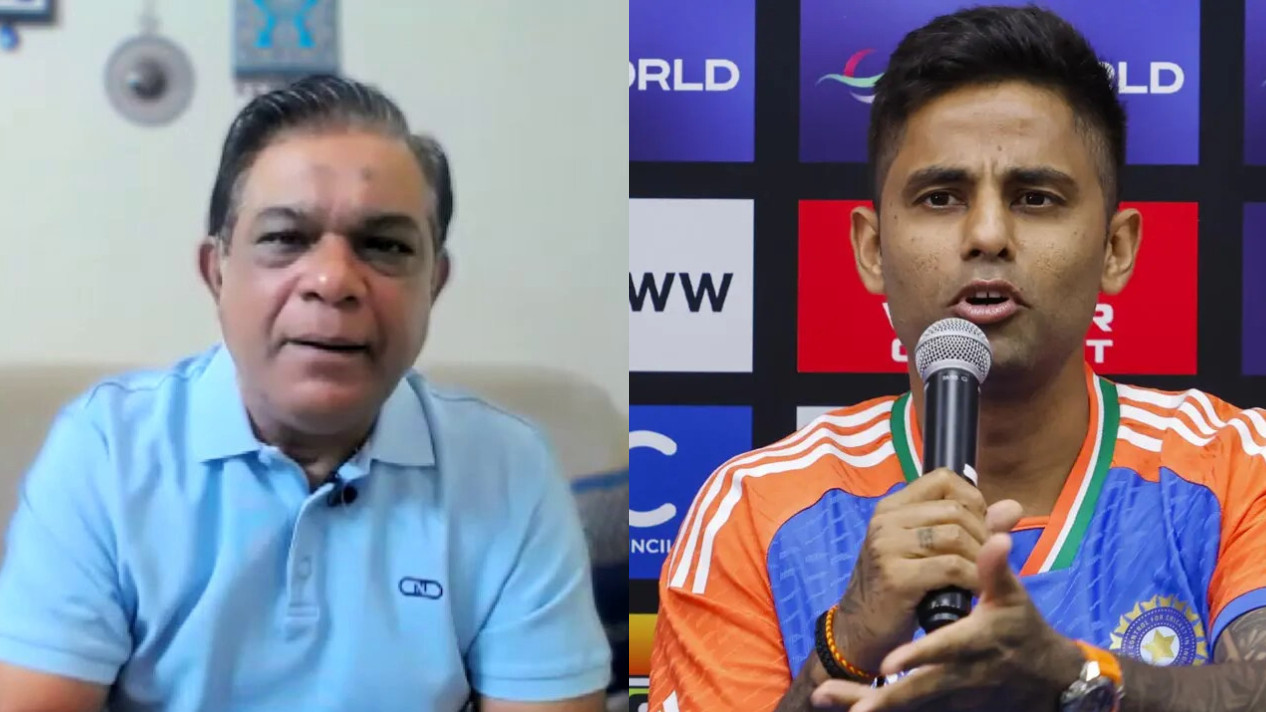
Former India off-spinner Harbhajan Singh disclosed on Sunday that the Board of Control for Cricket in India (BCCI) has launched a groundbreaking incentive plan to financially reward domestic cricketers who play more matches in a season.
The decision was made at the board's Annual General Meeting (AGM) in Mumbai, which Harbhajan attended on behalf of the Punjab Cricket Association.
“It has been decided that if a player plays more domestic matches in a season, he will get more money. This will be an incentive for teams to reach the finals of domestic tournaments. If a cricketer plays 14 first-class matches a season, he will get an additional match fee of Rs 1 crore,” Harbhajan told reporters after the meeting, as per the Times of India.
This move is seen as a game-changer for domestic cricketers, who are the breeding ground for upcoming international cricketers in India.
In the AGM, the BCCI also ruled that the Under-19 and Under-16 players must play at least one first-class match to be eligible for the Indian Premier League (IPL). This decision will be implemented from IPL 2026 onwards.
The move is part of the board's larger aim to strengthen the domestic cricket structure and guarantee that budding cricketers hone their talents in the longer format before entering the fast-paced world of franchise T20 cricket.
 The BCCI hopes that mandatory exposure to first-class cricket will provide a more balanced development pathway that emphasizes both technical growth and mental resilience.
Rajasthan Royals star Vaibhav Sooryavanshi became the youngest player to take part in IPL after being signed for Rs 1.10 crore before IPL 2025. He was 13 years and 243 days at the time of bought by RR. Other Under-19 players in the latest IPL included Ayush Mhatre, Andre Siddharth, Musheer Khan, and Swastik Chikara, to name a few.
The new regulation is anticipated to boost participation in state-level tournaments and the Ranji Trophy, enhancing India's long-standing red-ball system and preparing players for global championships.
Additionally, the mandate gives local teams more accountability for giving promising U-19 and U-16 players exposure, which could spark renewed interest in regional competitions.
(Times of India inputs)