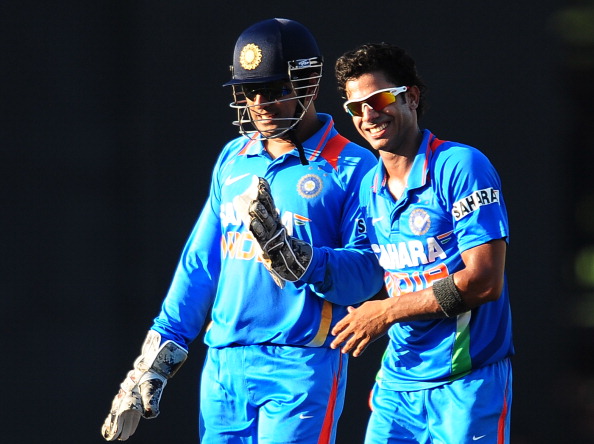
Earlier this month, an old video of Irfan Pathan taking a dig at the legendary MS Dhoni took the internet by storm. In the clip, the former all-rounder can be seen commenting on the circumstances leading to his exclusion from the Indian cricket team.
Pathan’s last appearance for India was in 2012, despite claiming a five-wicket haul in what turned out to be his final ODI. While the exact reasons behind his snub are only known to the selectors and team management, then-skipper Dhoni reportedly had a role to play in the poor handling of the all-rounder.
As the footage of Pathan’s old interview—recorded five years ago—emerged on social media, many fans started linking it to Dhoni.
Irfan Pathan can be heard saying in the video that he doesn’t have a habit of going to someone’s room and setting up their hookah for them. The remarks quickly went viral, with netizens perceiving that Pathan was accusing Dhoni of favouritism.
Now, former India batter Manoj Tiwary has backed claims of hookah sessions and favoritism during MS Dhoni's leadership.
“We have seen from close quarters. There were sessions where Hookah was taken and players who were closer to the captain were present in the room. Players were very smart enough to make sure that some buttering was done to get help from the captain if required," Tiwary said while speaking to InsideSport.
Tiwary represented India in 12 ODIs and 3 T20Is while he didn’t get a chance to play Test cricket. Playing his sixth ODI, the right-hander scored a match-winning 104* against the West Indies in December 2011 in Chennai. But he was dropped from the team soon after.
“It wasn’t compulsory for anyone to be there and only the players who knew that the room was open for Hookah, those are the players who used to go. The players were smart enough to know who was within close quarters with the captain at that point in time," Tiwary stated.
“Slowly, slowly, when the discussions come out of the room the following day, then only the others get to know. It wasn’t restricted; it was open, but it wasn’t something that was open for everyone; it wasn’t as if cards were sent to everyone," he further remarked.