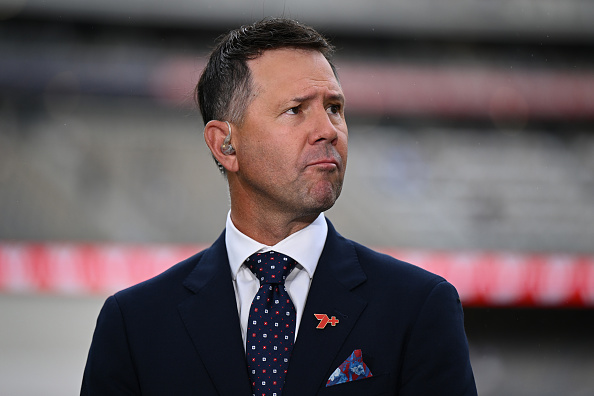
Australian legend Ricky Ponting has shared his thoughts on the growing shift in the modern cricket landscape, where ODI cricket faces the steepest challenge to remain relevant.
In an interview with PTI, Ponting candidly admitted that a reduction in the 50-over format is "inevitable" given the relentless expansion of global T20 franchise tournaments.
While the former Australian captain acknowledged he is not a fan of this direction, he noted that "something's got to give somewhere," making the ODI format the most likely casualty.
"As the months go by and the years go by and more and more T20 cricket is being played and more franchises and franchise tournaments are starting around the world, it's more and more likely that 50-over cricket is probably going to be played less. It's inevitable, which I'm not a huge fan of, to be honest," Ponting said.
Unlike his pessimistic outlook on ODIs, Ponting remains confident about the future of Test match cricket. He asserted that the traditional format will remain strong as long as the "Big Four"—Cricket Australia, the BCCI, the ECB, and Cricket South Africa—stay actively committed and invested in playing it.
"I love playing that format of the game, but something's got to give somewhere. Test cricket is still going to remain strong as long as India, Australia, England and probably South Africa want Test cricket to remain strong. It will. So something's got to give. And the obvious one is 50-over cricket," he remarked.
Despite the crowded calendar, Ponting highlighted that players are the primary beneficiaries of this T20 boom, as it opens up massive financial opportunities and helps veterans extend their careers.
Last month, ICC CEO Sanjog Gupta addressed the future of ODIs, emphasizing that the era of "randomly scheduled" bilateral cricket series must end to protect the sport's long-term sustainability.
“The era of randomly scheduled bilateral series has to come to an end, because countries will not be able to sustain cricket without context, culture, competition and competitiveness, which require significant investment of resources, both financial and non-financial,” Gupta told PTI.
“It’s important to stay focused on the four levers which drive attention and affiliation - context, culture, competition and competitiveness - and ODIs can continue not just to survive, but thrive.
“There is a place for the format in the product portfolio, which is inextricably linked to men’s and women’s ICC Cricket World Cups. We need to look at what we want the format to stand for and how we want it to evolve, including the expanse of participation,” he added.