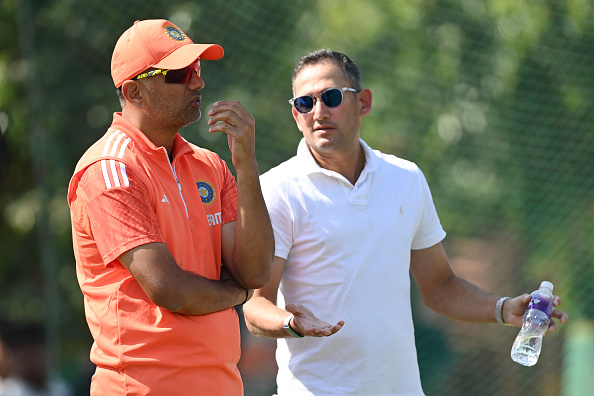
BCCI chief selector Ajit Agarkar has made a candid revelation about selection meetings behind closed doors getting intense, even admitting to near “bust-ups” with former India head coach Rahul Dravid during discussions over squad composition.
Speaking to NDTV, Agarkar gave a sneak peek into India’s selection process, stressing that disagreements are not only expected but vital for picking the best possible squad.
“I mean Rahul Dravid was coach before this — he’s a dear friend — and we've had some, I won’t call it bust-ups, but we’ve had some real disagreements with regards to what he wants,” Agarkar said. “But that’s because we are trying to do what’s in the interest of the team.”
Agarkar emphasized that the selection process is a collaborative one, involving thorough conversations with the panel members, the head coach, and the captain.
“Eventually, once you reach that selection meeting, most of us are on the same page. We've had lots of discussions leading up to that and lots of disagreements, which is important. There are five people who will have different thoughts — hopefully not five completely different thoughts — but the fact that we have those disagreements means we have more than one option for a particular spot,” he stated.
The chairman of selectors added that the majority of the squad often selects itself, with about 12 to 14 players finalized, and debates usually happening over one or two slots.
Agarkar clarified that, despite occasional differences, every decision is made keeping the team’s best interests in mind.
“Eventually, it's our decision to make. Whether it was with Rahul before or Gautam [Gambhir] now, and even with captains — Rohit before this and Shubman now — we discuss things. Our job is to try and give the best possible 15 so that the captain and coach can have their life made a little bit easier. And if you don't involve them in the discussion, it'll be foolish,” he remarked.
Agarkar also shared that communication doesn't stop once the squad is selected. “Even now when the team’s playing in Australia, I’ll have discussions with Gautam Gambhir or Shubman Gill. There’s a South Africa series immediately to follow. So you’re always constantly trying to see how best you can improve the team.”
With multiple formats in play and marquee events like the T20 World Cup and the ODI World Cup approaching, Agarkar spoke about the constant planning that goes into squad rotation, workload management, and long-term strategy.
“There’s a T20 World Cup coming. Six to eight months or a year before that, you start planning for it. Then there’s a 50-over World Cup coming, and there’s a WTC cycle which keeps going. So you have different plans for each.”
Despite the public backlash over selections, Agarkar made it clear that internal discussions remain civil, professional, and purpose-driven.
“Fortunately, we are in a position where we have lots of options. It makes our life a little bit easier, maybe not for fans who want the other player that we don’t pick, but at the moment, we are happy with the way it’s working.”