Batting legend Sunil Gavaskar has called out the deep-rooted mentality in Indian domestic cricket where teams settle for a first-innings lead rather than pushing for an outright victory.
In his column for Mid-Day, Gavaskar argued that this exact approach is why the Indian national team struggles to bowl out opposition sides twice on flat pitches in Test cricket.
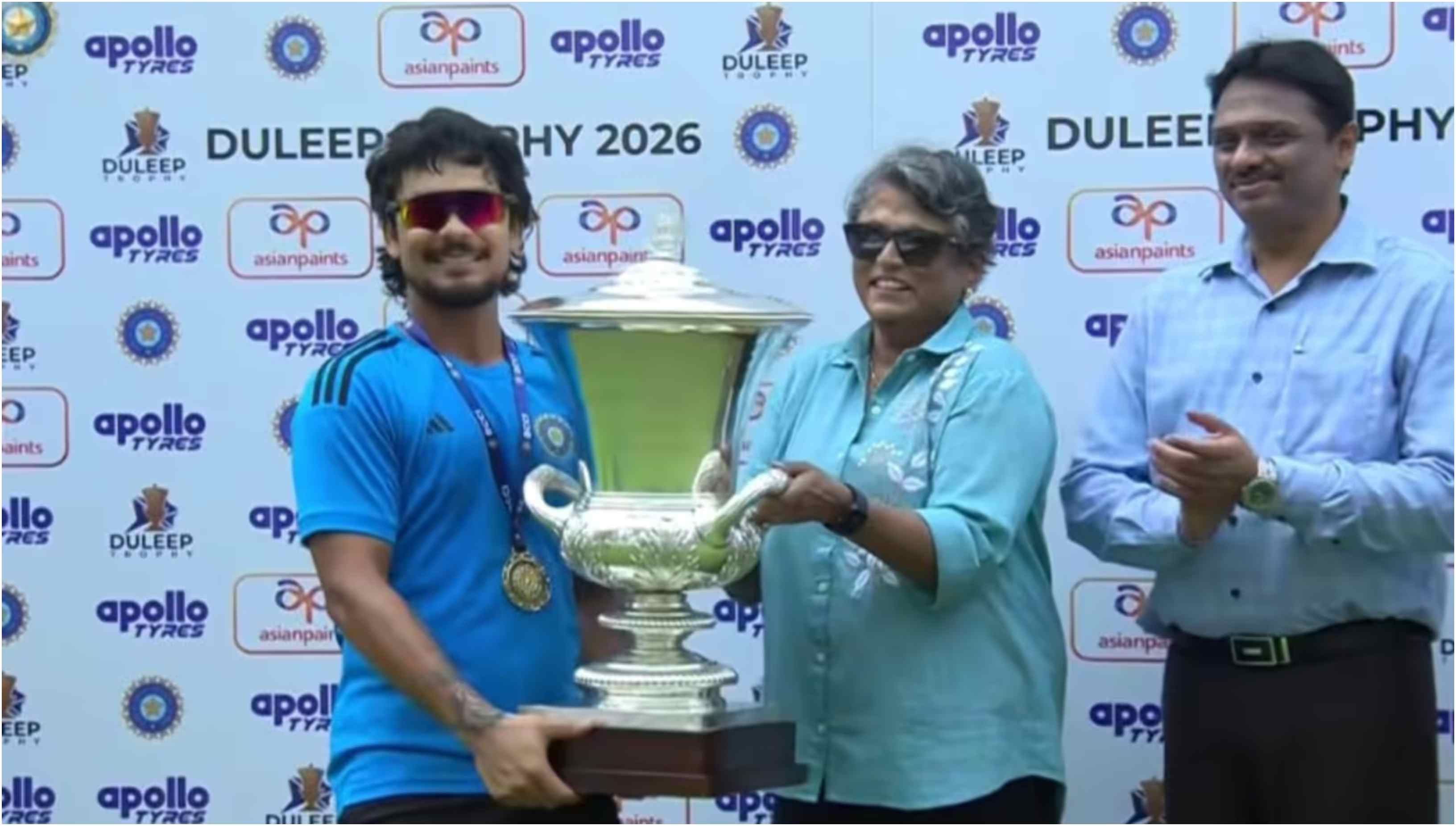
Gavaskar cited the example of 2026 Duleep Trophy Final at the MA Chidambaram Stadium, where East Zone batted for two days and racked up a gigantic score of 708 runs on the back of captain Ishan Kishan's blistering 270.
After bundling out South Zone for 336 and securing a massive 372-run first-innings lead, East Zone chose to bat again instead of enforcing a follow-on or aggressively hunting for wickets. They prolonged their second innings to 388/7 until both captains, Kishan and Tilak Varma, shook hands on Day 5 to settle for a draw, handing East Zone the trophy solely on their first-innings advantage.
Gavaskar directly linked this domestic mindset to the senior Indian team's recent struggles to close out Test matches—pointing out instances like the draw against Sri Lanka in Colombo where India failed to cleanly pick up 20 wickets to secure a 2-0 sweep.
"The disappointing part was that East Zone did not go for an outright win and instead prolonged their second innings unnecessarily. That both skippers agreed to end the game earlier than scheduled also doesn’t sit well. If the game was to be stopped early, then why wasn’t it stopped at lunch time itself, when it was clear that in the two sessions remaining, South Zone was never going to chase down a score more than 650 runs," Gavaskar wrote.
"This business of the first innings lead being enough, is one of the main reasons India struggle to take 20 wickets on good pitches. How does a team learn to take 20 wickets if they don’t bowl in two innings in a domestic game? India huffed and puffed on the last day of the second Test in Sri Lanka and couldn’t take the last four wickets for a victory," he added.
Because India domestic tournament formats grant progression or titles based on first-innings leads in drawn matches, captains have become risk-averse. They prioritize batting the opposition out of the game over creating winning opportunities.
Gavaskar believes as long as this rule remains in place, the Indian bowlers will struggle to take wickets on good pitches.
"Just like it takes time for a batter to learn how to go from 20 and 30 to a half-century and from 70 and 80 to a century, so also understanding how to get 10 wickets in the second innings takes time. There’s the question of stamina, of course, for after four days of tense cricket, not just the physical but the mental stress also can be too much," Gavaskar stated.
"And the one way to learn how to deal with that is at the first-class level. But, if a team that has taken a huge first innings lead is simply not interested in being on the field again, then how does one get the experience?" he remarked.